
Mercosur Deal Hurts Irish Farmers
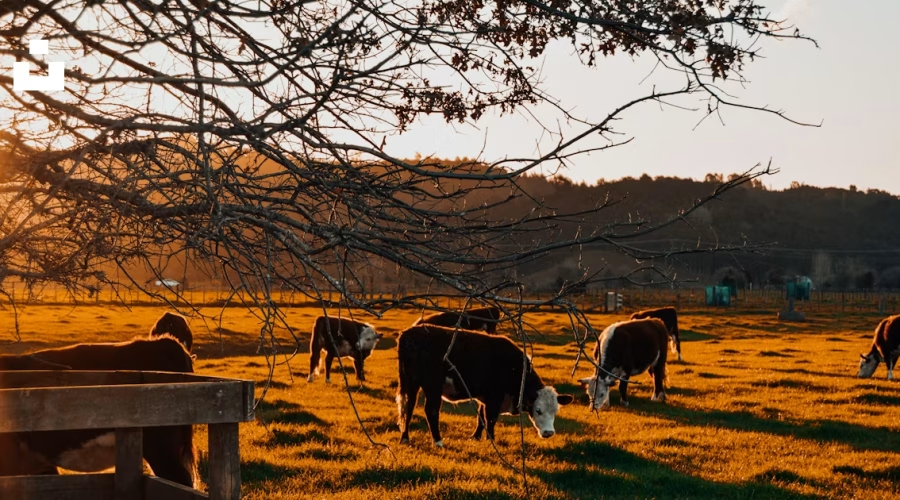
Mercosur Deal Hurts Irish Farmers as the EU moves closer to finalising a trade agreement with Mercosur countries like Brazil and Argentina. Supporters say it will boost Europe’s economy, but for Irish farmers and anyone who cares about food standards and the environment, it brings serious risks.
Cheap beef, unfair competition
The deal would allow 99,000 tonnes of beef into the EU each year at reduced tariffs. That is a large volume entering a market where prices are already tight.
Irish farmers operate under strict EU rules. Those rules cover:
- Animal welfare
- Traceability
- Antibiotic use
- Environmental requirements
These standards protect food quality and consumer confidence.
If beef comes in from systems with lower costs and weaker enforcement, Irish farmers end up competing against a product built on different standards. That is not a fair market.
Standards only work if they apply to everyone
Irish farming faces growing pressure to cut emissions and meet climate targets. Farmers are being asked to change how they produce food, and to carry the cost of those changes.
If the EU then opens the door to imports produced under weaker conditions, it sends a clear message:
High standards cost you money, and you will not be protected from competitors who do not meet them.
If the EU wants credibility on climate and sustainability, trade policy needs to match those goals.
Why “less than 1 percent” still matters
Supporters often say 99,000 tonnes is less than 1 percent of total EU beef production. The headline sounds small, but the impact is not spread evenly.
Irish beef competes in specific markets where price changes hit hard. Even a small increase in supply can push prices down. When prices drop, smaller family farms feel it first, because many already operate on thin margins.
A support fund will not solve the problem
Some point to a support package for farmers. Money helps in the short term, but it does not fix the core issue.
A payment will not:
- Stop beef prices falling
- Cover years of reduced income
- Protect rural towns if farms close
Farmers are not asking for compensation. They are asking for fairness.
This is not anti-trade
Trade matters to Ireland and to Europe. The issue is the terms of the trade.
A fair deal should:
- Protect food safety
- Reward strong standards
- Avoid pushing farmers into a race on price
If imports enter on easier rules, the market rewards the lowest-cost system, not the best one.
There is still time to act
The deal still needs approval from EU governments and the European Parliament. Public pressure matters before those votes happen.
What you can do? If you are a farmer
- Contact your local TDs and MEPs
- Tell them how this affects your farm and your income
If you are a consumer
- Buy Irish where possible
- Ask where your beef comes from when you shop or eat out
If you are online
- Share this post
- Keep the focus on standards, fairness, and rural jobs
Bottom line
The Mercosur deal puts Irish farmers in a lose-lose position. It risks undercutting local production, rewards lower standards, and weakens the EU’s climate and sustainability message.
This is not only about beef. It is about what rules we expect in our food system, and whether those rules apply to everyone.
Frequently Asked Questions
The EU–Mercosur deal is a proposed trade agreement with countries including Brazil and Argentina. Irish farmers are worried it could increase low-cost beef imports and create unfair competition against farms meeting strict EU rules.
The deal would allow 99,000 tonnes of beef into the EU annually at reduced tariffs. Even if that sounds small at EU level, it can still hit specific markets hard and push prices down.
Because the impact isn’t spread evenly across Europe. Irish beef competes in particular markets where even a small supply increase can lower prices, and smaller family farms often feel that squeeze first.
Irish farmers operate under strict EU rules covering animal welfare, traceability, antibiotic use, and environmental requirements. The concern is that imports produced under weaker enforcement could undercut farms that pay to meet higher standards.
Not really. A support payment may help short-term, but it won’t stop beef prices falling, replace years of reduced income, or protect rural towns if farms close—farmers are looking for fairness, not compensation.
The deal still needs approval from EU governments and the European Parliament, so public pressure matters. Farmers can contact TDs and MEPs, and consumers can buy Irish where possible, ask where beef comes from, and share the issue to keep focus on standards and rural jobs.