
Irish Tap Water Hidden Chemicals
Irish tap water is treated to be safe, but “safe” does not always mean “low exposure” or “best taste.” If you want to reduce chlorine, fluoride, and modern contaminants like PFAS and microplastics, a high-grade filtration system can be a practical next step.
Why drinking water is increasingly affected by modern pollution:
- Why chlorine and fluoride matter to Irish households
- Which contaminants Aqualine water filters are designed to reduce or remove
- Why Dutch Aqualine systems can be a strong option for Ireland, even though they are not sold directly in Irish retail
- How to take action today
Drinkwater “in danger” is not a headline, it is a trend
“Drinkwater in danger due to pollution” makes a point that is easy to ignore until it affects you: modern water systems are facing modern contaminants. Agriculture, industry, pharmaceuticals, and plastics have changed what ends up in rivers, lakes, and groundwater. Treatment plants do a strong job on microbes, but trace chemicals are a different category of problem.
Aqualine filtration is designed to remove up to 99.9% of polluting contaminates, including chlorine, lead, fluoride, and pesticides, and it also highlights microplastics and GenX removal performance.
What makes this relevant for Ireland, right now?
Two words come up again and again in Irish home water conversations: chlorine and fluoride.
Chlorine in Irish tap water, and why THMs matter
Chlorine is added during disinfection to make water safe to drink. A known consequence of chlorination is the formation of Trihalomethanes (THMs) when chlorine reacts with organic matter in the source water. Uisce Éireann explains this process directly, including why THMs form and why they are monitored.
Fluoride, personal choice, and cumulative exposure
Fluoride is widely discussed because it is not “accidental pollution,” it is a treatment decision. Some people are comfortable with it, others prefer to reduce it as a precaution or personal preference, especially when fluoride exposure can also come from toothpaste and other sources. If you are in the second group, a filter that targets fluoride becomes an obvious upgrade.
What the Aqualine water filter is, in plain English
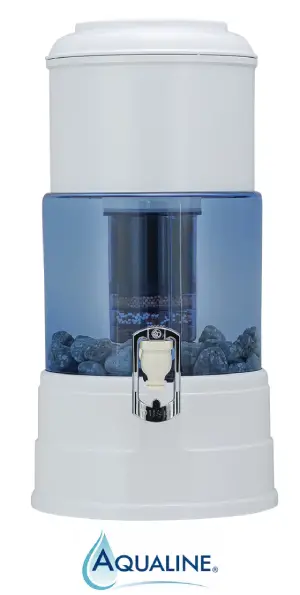
Aqualine is a Dutch-distributed water filtration system sold by Tradeline. It is a multi-stage, gravity-fed filter that combines multi- filtration with mineral stones.
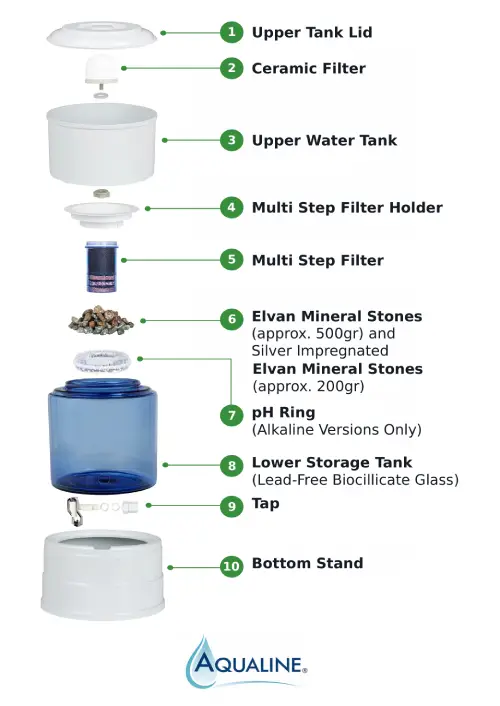
The main components are:-
Ceramic filter: This filter has a 0.2 micron pore size, which equals 0.0002 mm. That size is small enough to trap most common contaminants in tap water. It removes bacteria, microplastics, and undissolved limescale particles. Stops bacteria and coarse particles such as sand and rust.
Multi-Step Filter: removes chlorine, pesticides, drug residues, and other contaminants.
Volcanic Mineral Stones: Elvan mineral stones designed for the Aqualine 18. Some of the stones contain silver, which helps limit bacterial growth inside the unit. The stones add over 18 essential minerals and trace elements back into your water for better water balance.
pH ring: The optional pH ring increases your water’s pH by about 1 to 1.5 points. As a result, your drinking water becomes slightly alkaline instead of neutral. It also reduces the ORP, which stands for oxidation reduction potential. A lower ORP means the water has stronger antioxidant properties.
All contaminants Aqualine is stated to remove or reduce
Below is a complete list compiled from Tradeline’s Aqualine product and category pages, plus the Tradeline “drinkwater in danger” article. Wording matters here, so this list reflects what Tradeline states the system filters out or removes, often with high average reduction rates depending on the substance and filter stage.
Core Contaminants and Groups
- Chlorine
- Fluoride
- Lead and other heavy metals
- Pesticides
- Drug residues (pharmaceutical residues)
- Hormone residues
- PFAS (including “forever chemicals”) and GenX
- Microplastics
- Bacteria
- Coarse particles such as sand and rust
- THMs (Trihalomethanes), mentioned on certain Aqualine models as removed
- Odours and unpleasant tastes, via carbon filtration media
Why this is a strong match for Irish households
If you are filtering Irish tap water mainly for health reasons, there are three big wins:
1) Lower chlorine exposure, better taste, fewer disinfection by-products
Many people start with taste, then learn about THMs. If you have ever noticed a strong “pool” smell from the tap, you already know why people want this change.
2) Fluoride reduction
Whether you are cautious, sensitive, or simply prefer control, filtration lets you choose what you drink daily.
3) Protection against modern contaminants
PFAS, GenX, microplastics, pesticide residues, and drug residues are exactly the kind of “low dose, long time” exposures that push people toward better filtration. This is about reducing risk, not chasing perfection.
Dutch product, not sold directly in Ireland, but easy EU delivery
Aqualine water filters are Dutch-distributed products sold via Tradeline. You generally will not find them for direct retail sale in Ireland. The practical upside is simple: ordering from the EU store and delivering to Ireland is straightforward.
If you want to reduce chlorine and fluoride in your drinking water, and you want a filter that is also designed to reduce PFAS, GenX, microplastics, pesticide residues, drug residues, and more, Aqualine is a serious option to consider.
Tip for buyers in Ireland: Choose your model based on household size and daily water use, then plan to replace filters on schedule for consistent performance.
In a nutshell, Aqualine water filters stand out from many standard filters sold in Ireland because they are not just single-stage carbon systems focused only on improving taste. Aqualine uses a multi-stage filtration process that includes a fine ceramic pre-filter, a multi-step contaminant filter, mineral stones, and in certain models an additional pH ring. This means it not only reduces contaminants such as chlorine, fluoride, heavy metals, pesticides, PFAS, drug residues, and microplastics, but also remineralises the water with beneficial minerals like calcium and magnesium and can gently alkalise it. Many basic filters strip water or only reduce chlorine, whereas Aqualine is designed to both purify and rebalance the water, delivering cleaner, mineral-enriched, great-tasting water in one complete system.