
Why Irish Farmers’ Markets Are the Heart of Local Communities
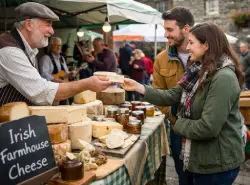
That direct relationship builds trust and keeps money circulating within the local economy.
2. Seasonal, Irish-Grown Produce
Irish farmers’ markets reflect the rhythm of the seasons.
From Spring onwards you might find:
- Fresh leafy greens
- Early potatoes
- Free-range eggs
- Raw Irish honey
Later in the year, stalls fill with:
- Root vegetables
- Organic apples
- Handmade preserves
- Small-batch cheeses
Eating seasonally not only supports Irish growers, it reduces reliance on imported produce with higher transport emissions.
3. Lower Food Miles, Higher Community Impact
Buying local means fewer transport miles. That can mean:
- Reduced carbon footprint
- Less packaging
- Fresher produce
- Stronger local resilience
When you spend €20 at a farmers’ market, more of that money stays within your county. It supports family farms, small bakeries, and start-ups that often go on to stock farm shops..
Farmers’ Markets as Community Hubs
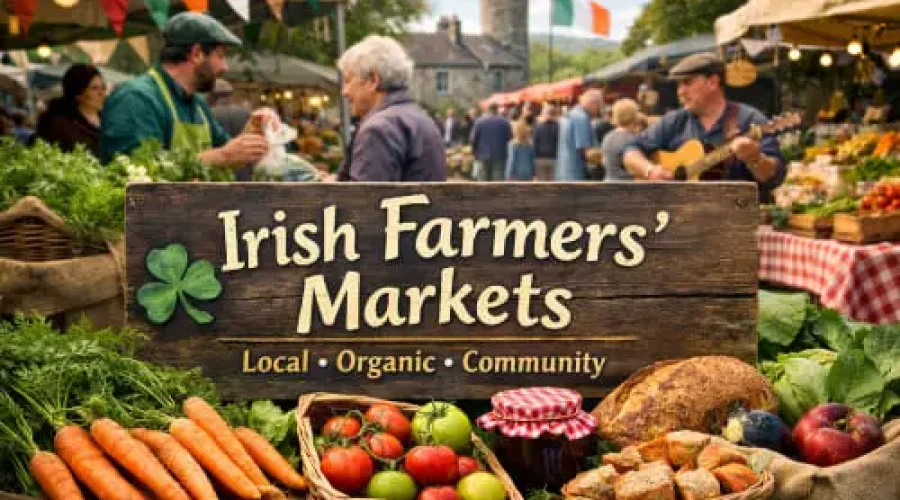
Markets are not just transactional spaces. They are social spaces.
You will often see:
- Neighbours catching up over coffee
- Children sampling local fruit
- Musicians playing traditional Irish tunes
- Local charities raising awareness
In smaller towns, the weekly market can feel like a mini festival. It strengthens community ties and creates visibility for new organic and sustainable businesses trying to get started.
For many small producers, the market stall is the first step before expanding into:
- A permanent farm shop
- An online store
- Wholesale supply to local cafés
- A listing in a national directory
Supporting Organic and Sustainable Practices
Not every stall is certified organic, but many follow low-input, environmentally conscious practices.
Common approaches include:
- Rotational grazing
- Chemical-free vegetable growing
- Regenerative soil practices
- Minimal plastic packaging
- Compostable or reusable containers
Under EU organic regulations, certified producers must meet strict standards regarding pesticides, fertilisers, and animal welfare. When you see organic certification from bodies such as the Irish Organic Association or Organic Trust, you know it meets regulated criteria.
If you are unsure, ask. Most Irish producers are transparent and happy to explain their growing methods.
How to Make the Most of Your Visit
If you are new to farmers’ markets, here are a few simple tips:
- Arrive early for the best selection
- Bring reusable bags
- Carry small change or check if vendors accept card
- Ask what is in peak season
- Try something new each visit
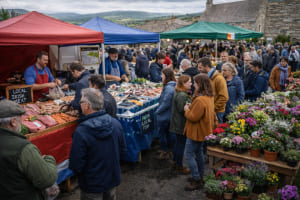 You might discover a local seaweed producer from various counties, a small-batch kombucha maker, or a family-run organic beef farm you did not know existed.
Exploring markets can also help you identify businesses you would like to follow online or find later through LocalOrganic.ie.
Why This Matters for Ireland’s Future
Supporting Irish farmers’ markets contributes to:
- Rural job creation
- Food security
- Preservation of traditional skills
- Shorter, more transparent supply chains
- Stronger local economies
In a time when global supply chains can be unpredictable, community-based food systems offer resilience. They also encourage a healthier relationship with food, one based on seasonality and connection rather than convenience alone.
For eco-conscious families and sustainability advocates, farmers’ markets can be found here: Markets